

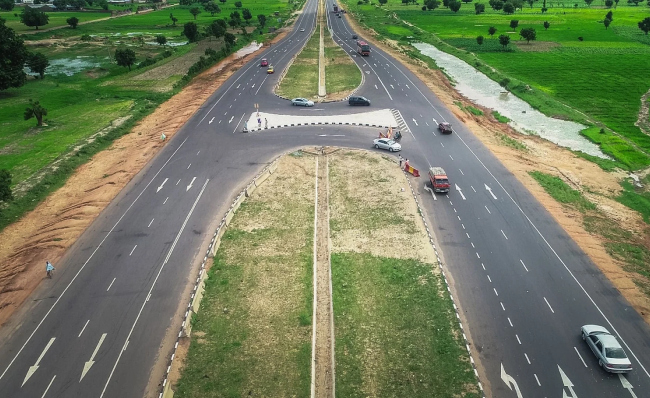
Introduction: A Strategic Transport Lifeline
The Abuja-Kaduna-Zaria-Kano Dual Carriageway is among Nigeria’s most significant road infrastructure projects. Stretching over 375 kilometres from the Federal Capital Territory (FCT) in Abuja through northern commercial hubs like Kaduna, Zaria, and Kano, this corridor plays a critical role as a major inter-regional economic artery — supporting trade, agriculture, mobility, and national integration.
Historically, this road has suffered from wear, deterioration, inadequate maintenance, and bottlenecks. Prior rehabilitation attempts began under previous administrations, but slow progress and financial constraints delayed meaningful transformation. Under President Bola Tinubu’s Renewed Hope Agenda, the project has gained renewed political prioritization and re-scoping, with accelerated timelines and revised execution strategies designed to meet Nigeria’s growing transport demands.
The Road Defined: Route and Structure
The dual carriageway project encompasses three major sections:
- Abuja to Kaduna – Serving as the southern entry point to the northern economy.
- Kaduna to Zaria – Cutting through key commercial and industrial communities.
- Zaria to Kano – Connecting major northern urban clusters and gateway markets.
Altogether, these sections form a continuous high-capacity highway that enhances north-south connectivity — connecting millions of Nigerians, facilitating intra-regional trade, and linking hinterland production zones with domestic and overseas markets. The road lies on Nigeria’s A2 highway corridor, which is also important for trans-African transport linkages.
Before recent restructuring, the highway project was awarded in 2017 to Messrs Julius Berger (Nig.) Plc at a contract value of N155.7 billion with a 36-month completion timeline. However, delays and cost escalations led to reassessments and renewed government strategies to accelerate execution.
Technical Re-Design and Construction
Concrete Pavement Adoption
In November 2024, President Tinubu approved redesigning 127 km of the remaining Abuja-Kaduna Section using Continuously Reinforced Concrete Pavement (CRCP) instead of traditional asphalt. Concrete was selected for greater durability, longer lifecycle, reduced maintenance frequency, and enhanced load-bearing capacity — critical for heavy commercial traffic along this corridor.
CRCP roads are generally more resilient under heavy use and environmental stress, and can last decades with minimal surface rehabilitation — an essential feature for Nigeria’s high-traffic national corridors.
Scope of Works and Upgrades
The comprehensive rehabilitation includes:
- Scarification and pulverization of existing pavement surfaces to prepare sub-base material.
- Embankment filling and stabilization with crushed rock and compacted fills.
- Reinforced concrete-lined drainage systems and hydraulic structures to improve water flow and reduce flooding.
- Median barriers, solar-powered streetlights, and safety features for nighttime visibility and accident mitigation.
- A 200 mm CRCP layer on carriageways and shoulders in selected sections for long-lasting performance.
These features mark a shift from mere patch repairs toward holistic and durable transformation of the dual carriageway as a long-term strategic asset.
Political Leadership and Timeline Acceleration
One of the defining aspects of the Tinubu administration’s approach has been tightened timelines and aggressive targets. In January 2025, the Federal Government set a 14-month completion timeline for the entire dual carriageway, a marked acceleration compared with earlier expectations that stretched over years.
Officials including the Minister of Information and National Orientation, Alhaji Mohammed Idris, reiterated that the project was being relaunched with a strong deadline and segmented execution strategy to avoid past delays. Sections were clearly defined — Abuja-Kaduna as Section I, Kaduna-Zaria as Section II, and Zaria-Kano as Section III — each with targeted construction oversight to ensure completion within the stipulated period.
The Minister of Works, David Umahi, highlighted that part of the delay stemmed from poor road conditions — including cracks, potholes, drainage failures, and deterioration — requiring comprehensive rehabilitation rather than simple patching. Emergency repairs were undertaken on multiple stretches to ease transportation difficulties even as full reconstruction proceeds.
Cost and Funding Dynamics
The project’s financial profile has also been restructured. In September 2024, the Federal Executive Council (FEC) approved a downward review of the project’s total cost to N740.79 billion, optimizing spending while preserving critical upgrades such as solar lighting and accelerated construction targets.
Despite this downward review, completing the project across all three sections will still require substantial additional funding. By late 2025, the Minister of Works disclosed that approximately N761 billion was needed to fully complete the dual carriageway, combining investment for sections I and III (Abuja-Kaduna and Zaria-Kano) with the rehabilitated Kaduna-Zaria stretch.
These estimates reflect both construction costs — reinforced concrete pavement, drainage systems, bridges, and lighting — as well as project administration, segmentation, and contingency provisions to limit further delays or overruns.
Strategic Importance and Economic Impact
Transport Connectivity
The Abuja-Kaduna-Zaria-Kano Dual Carriageway is more than a road; it is a national transport backbone. It links the Federal Capital Territory to major northern urban centres and serves as a vital corridor for:
- Movement of goods and services between the North and South.
- Agricultural supply chains — facilitating transport of produce from northern farms to markets nationwide.
- Trade and logistics networks — reducing travel time, vehicle operating costs, and transport bottlenecks critical for economic activities.
Road users benefit from improved safety, reduced travel times, and smoother journeys — especially important given the historical state of deterioration that made long-distance journeys hazardous and costly.
Social and Security Dimensions
Nigeria’s northern corridor has experienced safety challenges on major highways, including criminal activity that endangers travelers. The inclusion of solar-powered streetlights and median safety features aims to improve safety not just for drivers but for communities along the highway.
Additionally, the rehabilitation supports regional integration and national cohesion by enhancing mobility between diverse states and cultural zones, promoting inter-state commerce, and encouraging investment in local economies.
Challenges and Project Risks
Despite renewed focus, the project faces significant challenges:
Contractual Challenges
Work delays and cost disagreements led the Federal Ministry of Works to terminate the original rehabilitation contract for Section I (Abuja-Kaduna) with Julius Berger in late 2024 after the company refused to remobilize under revised terms. This contractual friction underscores risks inherent in large infrastructure projects where scope, cost, and timelines must be tightly managed.
The contract termination forced the ministry to re-allocate portions of work — including some redirection to other contractors — to ensure continuity and adherence to new timelines.
Funding and Execution Risks
Even with downward cost revisions, securing adequate funding remains a challenge for full project completion, particularly across multiple sections and in the context of broader national infrastructure commitments. Delay in funds release, exchange rate volatility, and inflationary pressures could extend timelines or force further contract re-negotiations.
Future Outlook: A Transformative Corridor?
Without question, the Abuja-Kaduna-Zaria-Kano Dual Carriageway is among Nigeria’s most critical transport infrastructure initiatives. If delivered within the government’s ambitious timeline and scope — including reinforced concrete pavement, safety features, and lighting improvements — it could reshape transport economics in northern Nigeria and strengthen national connectivity.
Beyond immediate traffic flow improvements, the road has potential multiplier effects on commerce, agriculture, regional development, and inter-state trade — especially as Nigeria works to diversify its economy and enhance domestic value chains.
However, project proponents must continue addressing contractor performance, funding sufficiency, and technical execution challenges to ensure that the corridor does not remain another partially completed legacy project but becomes a true catalyst for national growth and mobility.


